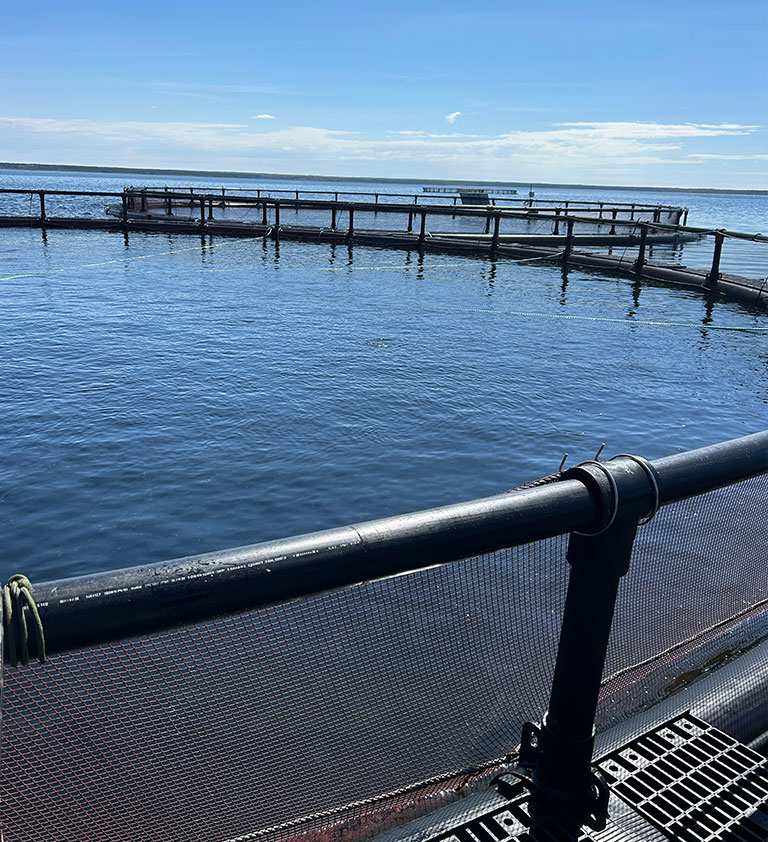
The 2025 Ulva cultivation season at the Estonian pilot site has successfully concluded, with all biomass harvested and structures safely removed from the water before the sea freezes. The harvest took place throughout September and November, with cultivation lines retrieved and processed to quantify biomass yields. The rainbow trout harvest has also been completed, and the fish pens have been removed for the winter season, marking the end of the operational period for this year’s IMTA demonstration. The team is now shifting focus to laboratory analysis of the growth data, examining tissue nutrient content (carbon and nitrogen), dry weight yields per meter of seeded line, and assessing the effectiveness of this IMTA (Integrated Multi-Trophic Aquaculture) configuration for nutrient bioremediation alongside the fish farm operations.
With these activities complete, we are now on track to meet scheduled deliverables for the upcoming reporting period. Simultaneously, Work Package 6 partners are advancing the Life Cycle Assessment (LCA) analysis, integrating the performance data from this season’s Ulva cultivation with blue mussel production metrics to evaluate the environmental sustainability and carbon footprint of offshore low-trophic aquaculture operations. This comprehensive analysis will provide crucial insights into the viability and environmental benefits of IMTA systems in coastal settings.
As we enter the winter months, the team is already preparing for the 2026 growing season. Planning is underway for the spring deployment of new cultivation lines, with preparations including maintenance of equipment, refinement of deployment protocols based on lessons learned, and coordination with our aquaculture operator partners. The upcoming season will benefit from environmental baseline data collected over the past two years, enabling more targeted monitoring and adaptive management approaches.